

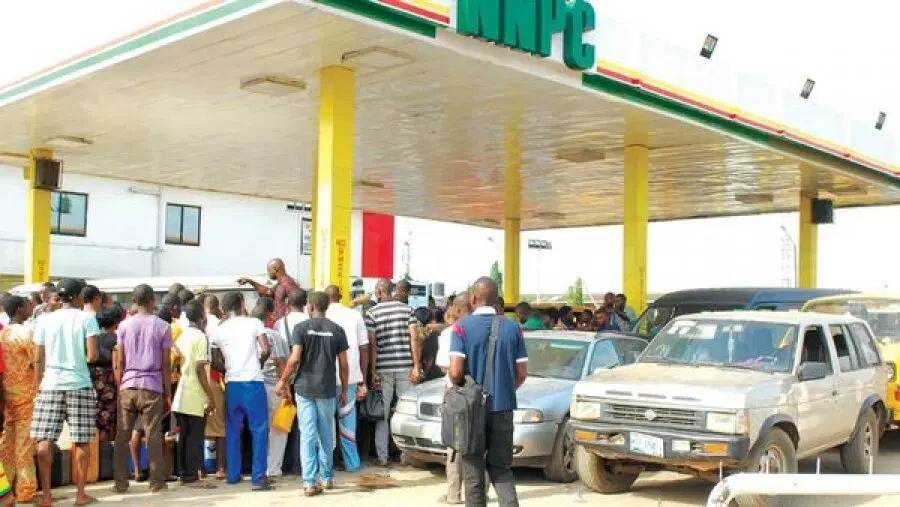
Federal Government don announce plan to sell petrol for N1,350 per litre for 30 days for selected filling stations of Nigerian National Petroleum Company Limited (NNPCL), as opposition parties don criticise di move.
Minister of Finance, Taiwo Oyedele, reveal dis during meeting with journalists for Abuja. E explain say di government don agree with NNPCL to give up im profit from petrol sales and sell fuel at cost price to reduce di hardship wey high fuel prices dey cause for families wey no get enough money.
Di Presidency also confirm say President Bola Tinubu approve di arrangement. According to di government, public transport operators go get first chance to benefit from di plan.
Oyedele say di N1,350 price na maximum price wey government dey negotiate for petrol at di point where dem load am into tankers or based on di cost of bringing am into di country. E add say dem go review di price every month.
However, former Vice President Atiku Abubakar, wey be presidential candidate of African Democratic Congress (ADC), reject di plan. E describe am as temporary political solution wey no go remove di hardship wey high fuel prices don cause Nigerians.
Nigeria Democratic Congress (NDC) also condemn di arrangement, describing am as an attempt to deceive Nigerians. Meanwhile, ADC Presidential Campaign Council accuse di government of trying to use fuel discount to win people support ahead of di 2027 election.
Oyedele warn say bringing back fuel subsidy, as some presidential candidates don suggest, fit make petrol price rise to N2,000 per litre. E also claim say such move fit damage Nigeria economy and make di naira exchange for as high as N3,000 to one dollar.
Di minister explain say bringing back subsidy fit reduce government money, affect Nigeria credit rating, make borrowing more expensive, encourage investors to carry their money comot and put pressure on di naira.
E also warn say such development fit reverse progress wey Nigeria don make in reducing inflation and give Central Bank of Nigeria room to begin reduce interest rates.
Oyedele insist say removing fuel subsidy no mean say government no dey take steps to reduce di hardship wey Nigerians dey face. E point to local refining as one of di reasons petrol supply don improve, adding say Dangote Refinery no for fit operate under di old subsidy system.
E also mention government efforts to encourage cheaper transport through Compressed Natural Gas (CNG) and electric vehicles.
According to am, more than 120,000 vehicles don begin use CNG, with over 400 conversion centres, 96 refuelling stations and 18 stations wey dey change liquefied natural gas to compressed natural gas.
E say government don also put more than 550 CNG buses on di road, and for places wey dem dey operate, transport fares don reduce by 30 to 50 per cent.
Oyedele add say government don remove some taxes on electric vehicles and solar equipment, reduce import duties on vehicles and provide duty waivers worth over N100 billion. E say imports of CNG vehicles, electric vehicles and renewable energy equipment don more than double since May 2023.
On di value of di naira, di finance minister clarify say di current government no devalue di currency. Instead, e say di naira lose value because Nigeria no get enough foreign reserves to defend di former exchange rate.
E explain say di old exchange rate mainly benefit people wey get strong connections, while manufacturers and ordinary Nigerians dey pay much more to get foreign currency through di unofficial market.
Oyedele say di difference between official and unofficial exchange rates don reduce from over 60 per cent to less than five per cent. E also put Nigeria foreign reserves at about $55 billion, which e describe as di highest level in 18 years.